How to control/treat VOCs (Volatile Organic Compounds)?
Topic: Vapor recovery unit
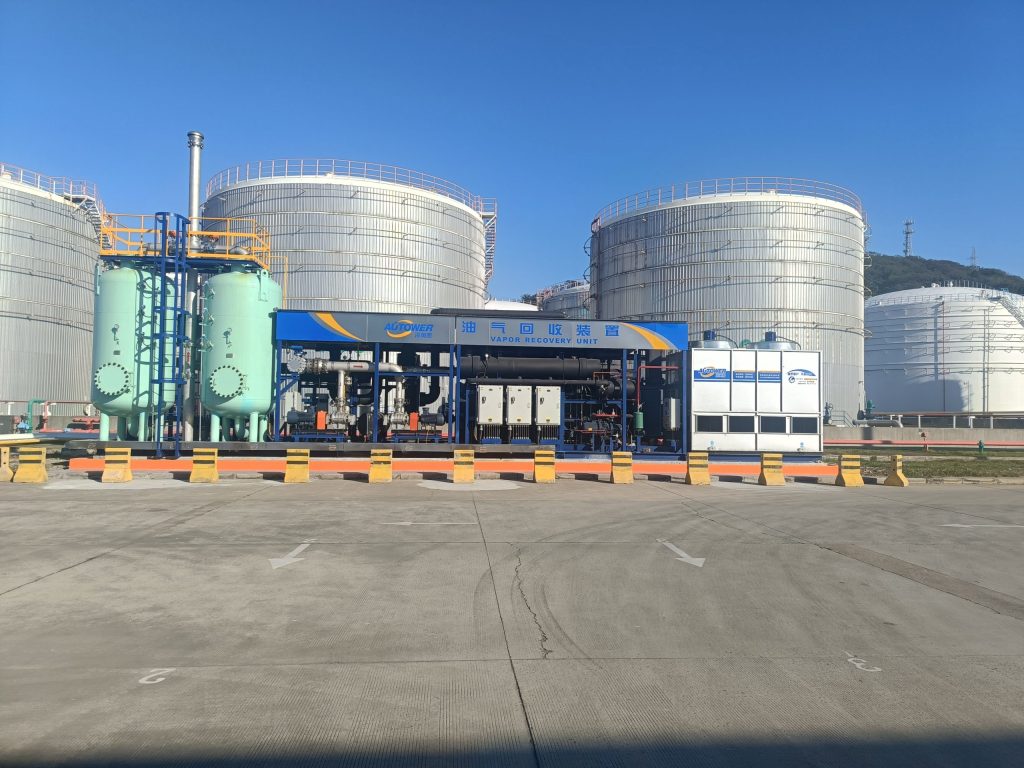 |
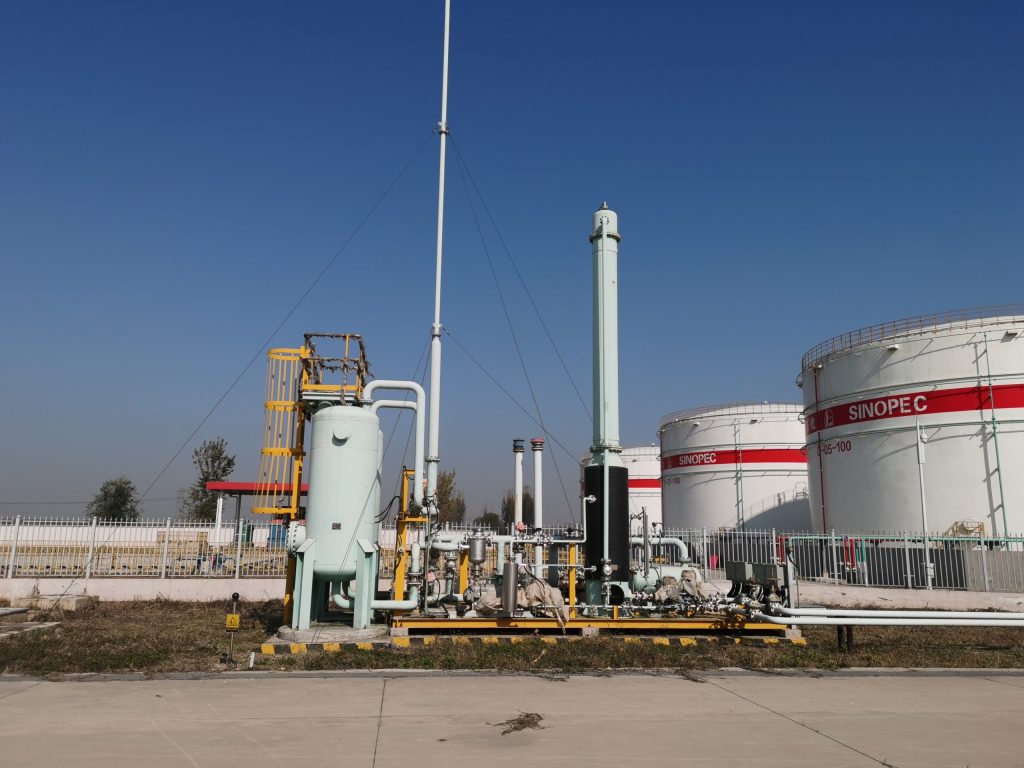 |
1.1 Organized Emission Sources
1)Combustion Flue Gas
Heating furnaces of various units, ethylene cracking furnaces, catalytic cracking, sulfur recovery, power boilers, incinerators, flares, etc.
2) Process Tail Gas
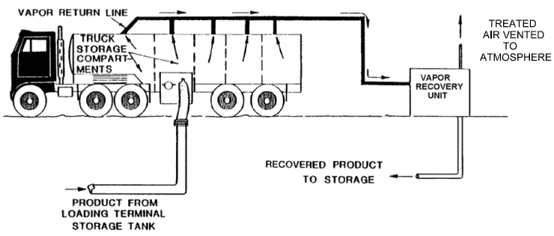
Various hydrocarbon-containing process tail gases emitted by various units, oxidation desulfurization alcohol tail gas, reforming catalyst regeneration, closed lock hoppers for catalytic desulfurization, storage and transportation oil gas recovery, etc.
- Unorganized Emission Sources
Fugitive emissions from equipment and pipeline components, breathing and loading/unloading emissions from storage and transportation systems, and volatile organic compounds (VOCs) and odorous gases emitted during wastewater collection, storage, and treatment.
- SO₂
- NOx
- Particulate Matter
- CO
- CO₂
- VOCs
- Odorous Substances (including H₂S, NH₃, Styrene, Methanethiol, Dimethyl Sulfide, etc.)
Autower-Group focuses on the treatment of Volatile Organic Compounds (VOCs) emitted from liquid petrochemical products.
3.1 Environmental Responsibility in VOCs Governance
Important precursors to PM2.5 include volatile organic compounds (VOCs), ozone (O3), and nitrogen oxides (NOx), while VOCs and NOx are also key precursors to O3. Since VOCs serve as common precursors to both PM2.5 and O3, the prevention and control of VOCs at their sources—such as industrial enterprises, oil product volatilization, and urban domestic sources—are crucial. This directly impacts the pollution control of PM2.5 and O3, determines the ultimate outcome of the “Blue Sky Defense War,” and affects the overall landscape of high-quality development and the construction of a “Beautiful China.”
3.2 Source Control of VOCs
Strengthen the comprehensive governance of VOCs throughout the entire process and across all links, focusing on the prevention and control of VOCs from industrial enterprises, oil product volatilization, and urban domestic sources. It is encouraged to use low-leakage breathing valves and emergency relief valves for storage tanks, employ full-liquid-contact seals, and conduct regular leak detection and repair (LDAR) programs. For automobile tank trucks, the use of sealed quick-connect couplings and enclosed loading/unloading systems should be promoted. Enterprises must not use flare combustion devices as routine air pollution treatment facilities.
Furthermore, priority should be given to pipelines, railways, or waterways for the long-distance transportation of bulk materials. For transportation within the factory or short-distance shuttling, clean transportation methods such as fuel vehicles complying with GB 18352.6 or GB 17691, new energy vehicles, pipelines, or tubular belt conveyors should be prioritized. Powdery materials such as pulverized coal, fly ash, lime, dust removal ash, and desulfurization ash should be stored in a sealed or enclosed manner and transported via sealed methods like pipelines, enclosed trestles, or tubular belt conveyors.
- Organic waste gas should be prioritized for recovery and reuse based on exhaust gas characteristics, VOC components and concentrations, and production conditions. Exhaust gas unsuitable for recovery can be treated using collaborative governance or separate collection and treatment. For high-concentration organic waste gas, it is advisable to use “pretreatment + catalytic oxidation” or incineration. For low-concentration organic waste gas, advanced, mature, and reliable process technologies such as biological deodorization, Regenerative Thermal Oxidation (RTO), Catalytic Oxidation (CO), and Regenerative Catalytic Oxidation (RCO) are recommended. Except for single-purpose malodor treatment, the standalone use of technologies like low-temperature plasma, photocatalysis, and photo-oxidation is not advisable.
VOCs-containing waste gas generated from storage tanks, loading/unloading, process units, sewage ponds, and other equipment/facilities should prioritize collaborative governance using existing production units (facilities) such as process heaters, waste incinerators, boilers, sulfur reaction furnaces, tail gas incinerators, or low-pressure flare gas systems. Based on the VOC and oxygen content in the exhaust gas, collaborative governance methods include using it as combustion air for furnaces, direct incineration in furnaces, or routing to the low-pressure flare gas system. Dedicated treatment facilities such as Thermal Oxidation (TO), RTO, CO, RCO, condensation, absorption, membrane separation, adsorption, low-temperature plasma, and bio-trickling filters are excluded from this preference.
Exhaust gas containing volatile organic compounds under abnormal operating conditions should be collected and treated, with priority given to recovery and reuse. Flare combustion facilities are strictly for emergency disposal and must not be used as routine air pollution treatment facilities.
- HJ1094-2020 “Technical Specification for Waste Gas Treatment Engineering in Petroleum Refining Industry”
When the VOC concentration is greater than or equal to 30,000 mg/m³, it is generally advisable to prioritize recovery and treatment using adsorption, absorption, condensation, membrane separation, and their combined processes. - Huan Da Qi [2019] No. 53 “Notice on Issuing the Comprehensive Governance Plan for Volatile Organic Compounds in Key Industries”
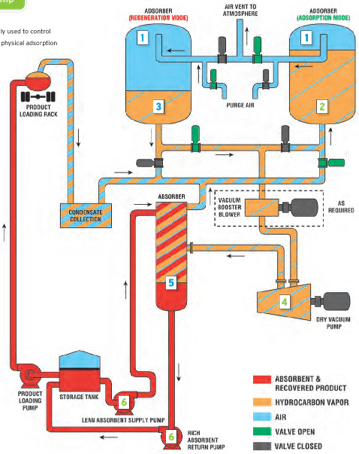
For oil and gas (solvent) recovery, technologies such as “condensation + adsorption,” “adsorption + absorption,” and “membrane separation + adsorption” are recommended.
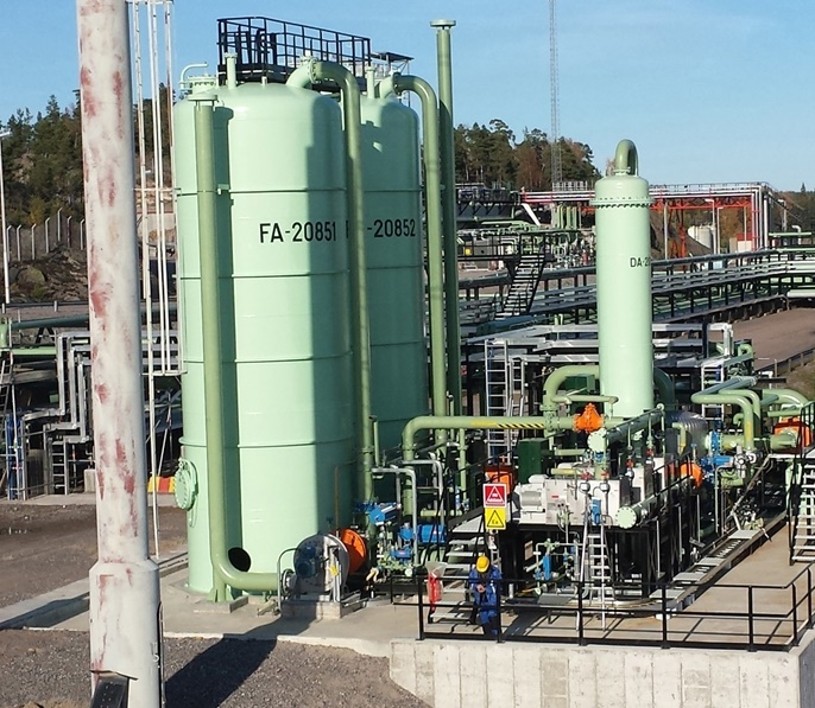
Adsorption + absorption process
 |
 |
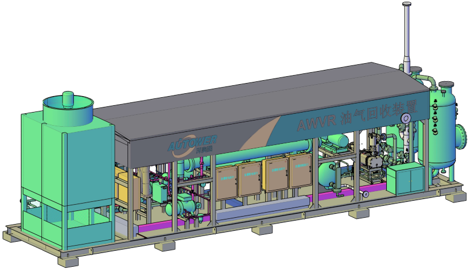
Condensation + absorption process
 |
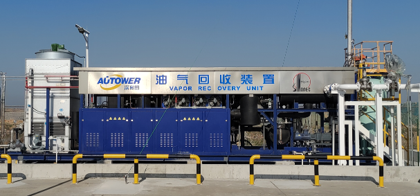 |
- High Recovery Rate: Utilizing advanced recovery technology, the system achieves a recovery rate of up to 99%, significantly boosting oil and gas recovery efficiency.
- Low Energy Consumption: Optimized energy-efficient design reduces operating costs. Data shows that this low-energy design can cut energy consumption by 20%.
Resolving Industry Pain Points: Effectively solves common industry issues such as ice blockage, compressor oil starvation, failure to reach design temperatures, and the inability to operate continuously and stably.
- Proprietary Patent Technology: Backed by over 10 proprietary patented technologies, including 4 invention patents.
- Continuous & Stable Operation: The system design ensures uninterrupted and stable operation, thereby reducing maintenance requirements.